When the instrument catalogue has no answer, Erchinger develops the right solution — from the first sketch to a validated single-unit or small-batch product. ER Solution stands for bespoke surgical instruments, developed precisely for your application.
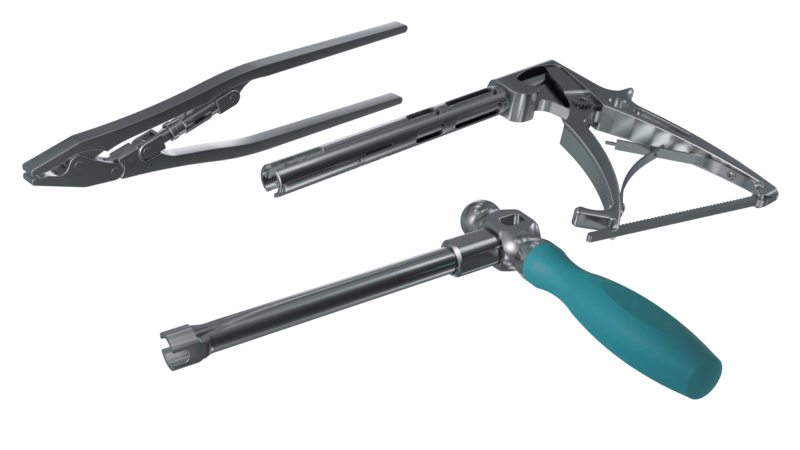
Not every surgical requirement can be met with a standard instrument. A new surgical technique, a user\u2019s specific ergonomic requirement, or the further development of an existing design for a new purpose — in all these cases, Erchinger develops an instrument under ER Solution exactly for that one need, rather than offering an off-the-shelf compromise.
Three characteristics that set ER Solution projects apart from a standard order. Flip the cards for the story behind each one.
From the first sketch to a release-ready design data set — agreed with you across several iteration loops.
Development at Erchinger runs from the first sketch to a release-ready design data set — agreed with the customer across several iteration loops.
Where recurring demand emerges, the instrument is documented, validated and transferred into an ER Line series.
If recurring demand emerges after single-unit manufacturing, the instrument is documented and validated for transfer into an ER Line series.
Every development is documented to EN ISO 13485:2016 — usable for your own technical documentation.
Every development is documented to EN ISO 13485:2016 — from requirement to release, usable for your own technical documentation.
Two views of the breadth of bespoke instruments we manufacture — from functional area of use to specific, already realised instrument types.
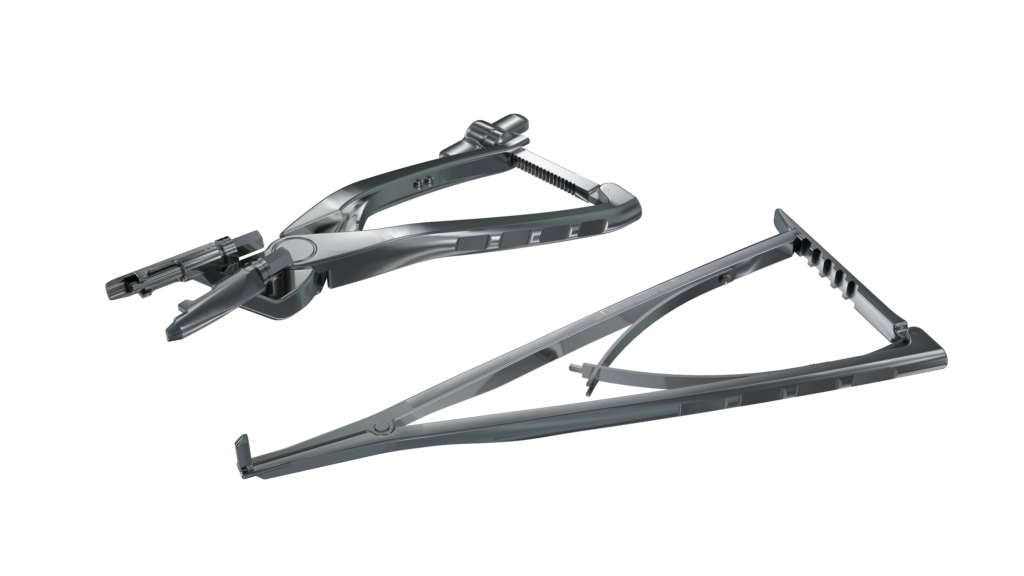
From access through dissection to fixation: Erchinger develops instruments precisely for each step of a procedure — matched to implant, surgical technique and user.
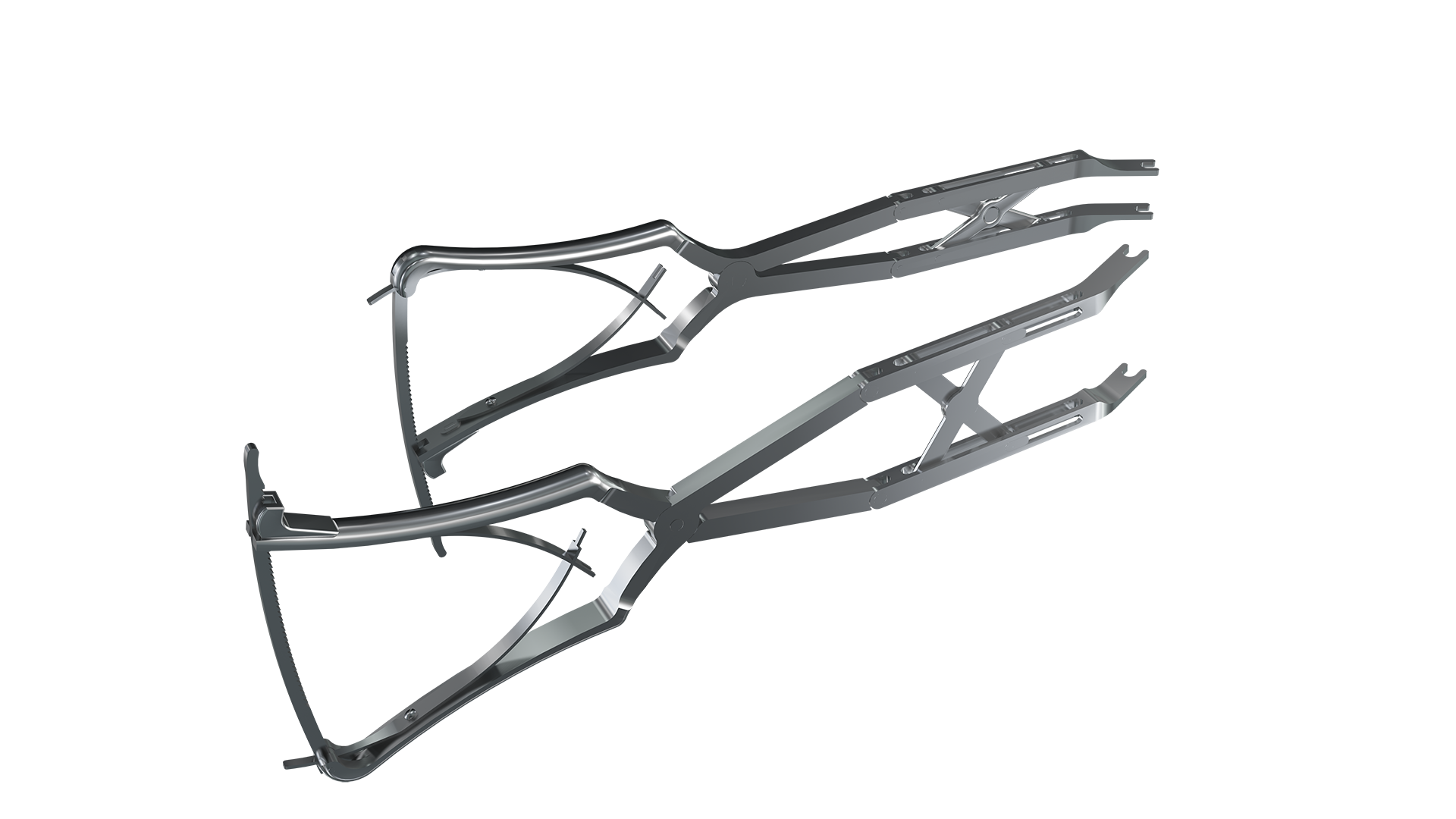
Pedicle probes, pedicle awls and tap tools for access and dissection, persuaders for fixation, distraction and compression forceps for placement, and rod-holding forceps and rod benders for setting titanium rods — a selection of ER Solution instruments already delivered.
This selection shows a snapshot of ER Solution instruments already delivered — not the full scope of our development work. We would be glad to discuss your specific requirement with you personally.
Four steps from the first requirement to validated manufacturing — and, where demand recurs, a possible entry point into a later ER Line series.
Sketch, optimisation idea or technical requirement — protected where needed by a non-disclosure agreement.
CAD design and joint design review with the customer, until geometry and function are right.
Functional prototypes to test ergonomics and mechanical function before final release.
Validated manufacturing of the single-unit or small-batch product — with later transfer into an ER Line series possible where needed.
One example from ER Solution practice — we will add further delivered projects here as references are cleared for publication.

We develop, manufacture and assemble instruments exactly to your requirements and specifications.
A bespoke instrument with a toggle-lever mechanism for controlled force transmission in the operative field — developed exactly to a MedTech customer's specification, for which no standard instrument existed. From the first design concept to a validated functional prototype, the instrument was developed in close consultation with the customer, protected by a non-disclosure agreement. It is manufactured in Tuttlingen to a documented, release-ready process — with transfer into a small-batch series possible at any time should demand recur.
Development, prototyping and manufacturing all take place at the same site — short distances between design office and workshop ensure fast iteration loops and consistent documentation.
Three recurring starting points from which ER Solution projects emerge. Flip the cards for the story behind each scenario.
Development together with the user — starting from a description of the surgical workflow, not a catalogue product.
Erchinger develops the right geometry and function together with the user — starting from a description of the surgical workflow, not an existing catalogue product.
An adapted variant of an existing base design — including a functional prototype for testing before final release.
An adapted variant is developed from an existing base design — including a functional prototype for testing before the final geometry is released.
Existing design data as the starting point — geometry, material or manufacturing method adapted as needed.
Existing design data serves as the starting point — Erchinger adapts geometry, material or manufacturing method specifically to the new requirement.
Customer testimonials will follow shortly — shown here as placeholders until specific customer quotes are cleared for publication.
[Placeholder — a specific customer quote will follow once a reference is cleared for publication.]
[Placeholder — a specific customer quote will follow once a reference is cleared for publication.]
ER Solution stands for the bespoke new development of a surgical instrument for a specific, as yet unmet need. ER Line comprises already established, series-manufactured instrument ranges for spine, proctology, and cannulas and suction tubes, adapted to customer specification.
Yes. Erchinger develops exclusively to customer order and does not bring competing products of its own to market. Projects are treated confidentially, typically under a non-disclosure agreement (NDA).
ER Solution projects start from batch size 1. Whether a bespoke development makes sense depends less on quantity than on actual need: if no suitable standard solution exists, even a single custom instrument is worthwhile.
Yes. If recurring demand emerges after single-unit or small-batch manufacturing, an ER Solution instrument can be transferred into documented, validated series manufacturing.
This depends on the complexity of the requirement. Several design iterations between CAD design and functional prototypes are typical, until ergonomics and mechanical function meet the customer's requirements.
The starting point can be a sketch, a technical requirement, or even just a description of the unsolved problem. In the initial conversation, Erchinger and the customer clarify requirements, timescale and, where needed, a non-disclosure agreement.
Whether it's a sketch, an idea or a technical specification — we assess feasibility and develop your bespoke special surgical solution, from design to validated manufacturing.